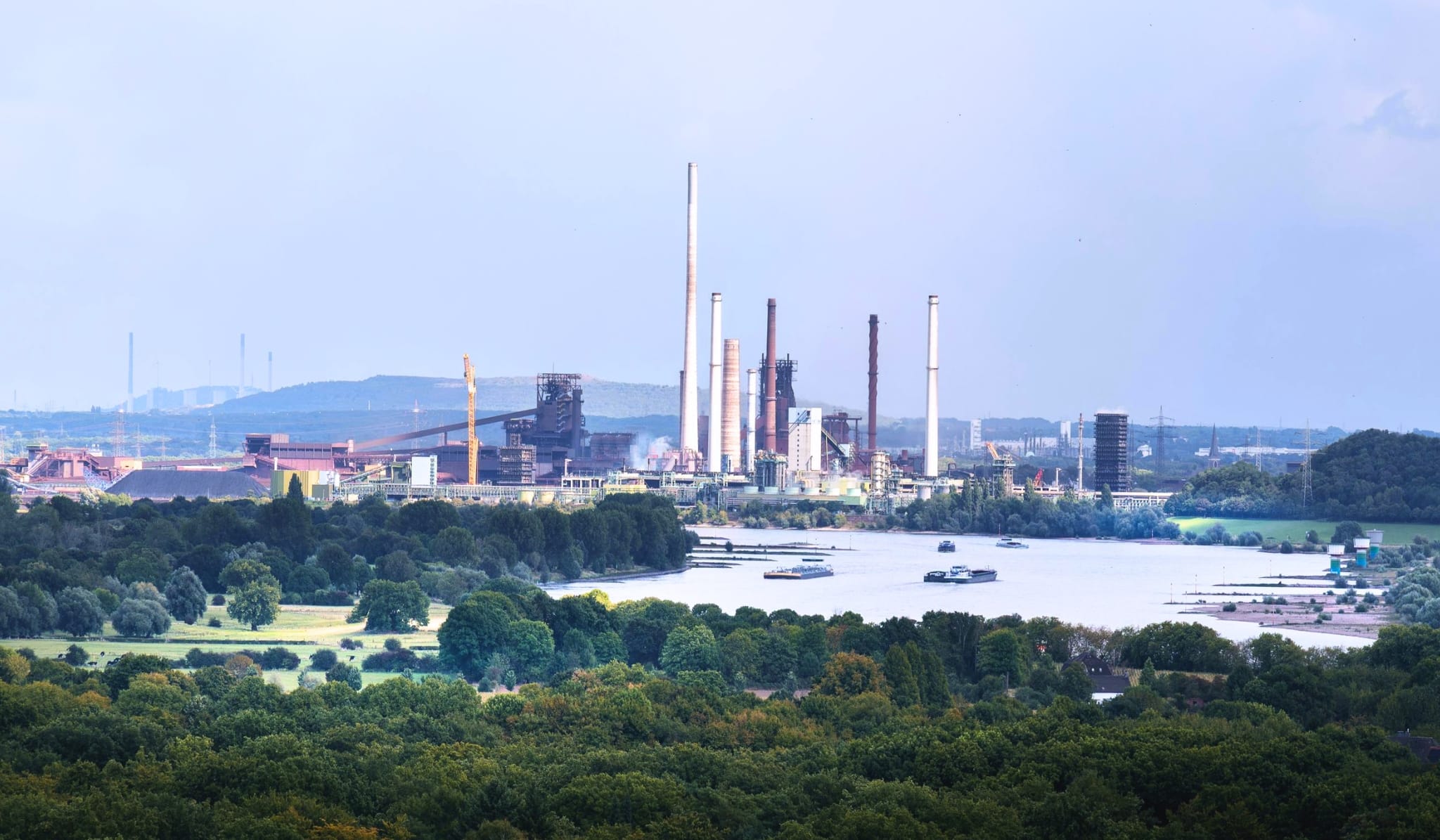
Manufacturing remains a cornerstone of European economy, contributing roughly 14% to 15% of GDP and supporting more than 30 million jobs. It now faces a decisive crossroads shaped by geopolitical fragmentation, supply-chain risk, high energy costs, skills shortages, and intensifying global competition, which will require major adaptation in the decades ahead.
A Sector at an Inflection Point
European manufacturing has long been defined by its diversity of specialisms: German precision engineering and chemicals, Italian craft-industrial clusters, French aerospace and defence, British life sciences, Swedish innovation in materials and clean technology. Yet the forces now acting on all of these simultaneously — what Markus Nakanishi, Partner at Valtus in Germany, describes as “rising energy and operating costs, growing regulatory pressure, a demographic shortage of skilled labour, and a geopolitically fragmented world—all coinciding with the imperative to digitize and decarbonize”—are testing the model in ways that feel fundamentally different from previous cycles.
Deloitte’s Future of European Manufacturing research captures the tension plainly: European manufacturers remain global leaders in quality and technology across many segments, but the risk of losing that position is rising. Rising regulation, energy costs above global competitors, and chronic labour shortages are combining to weaken cost competitiveness at precisely the moment when investment in new capabilities is most needed.
Recent data reflects this pressure: euro area industrial production was 1.2% below its January 2025 level in the latest Eurostat estimate, with capital goods and consumer goods output both contracting. Germany, the continent’s largest industrial economy, has seen prolonged industrial decline: industrial production has fallen for several consecutive years and early 2026 data show renewed weakness, especially in automotive, machinery, and other manufacturing categories.
This is no ordinary downturn:
“German manufacturers have reached a critical point: the challenge is no longer about optimisation, but about fundamental repositioning under constrained resources and high uncertainty. Many business models that have been successful for decades are gradually losing competitiveness — not abruptly, but steadily.”
Markus Nakanishi, Partner at Valtus in Germany
He identifies three priorities for manufacturers that will successfully navigate the decade ahead: strategic focus over breadth, rethinking industrial excellence through automation and AI rather than mere cost-cutting, and — critically — ensuring the right leadership is in place at the right moment.
Italy presents a contrasting dynamic. Its network of specialised industrial districts — precision mechanics, luxury goods, food processing, packaging — serves as a powerful differentiator, and Italian exports remain remarkably resilient in premium segments. Yet the structural pressures are equally real.
For Roberto La Caria, Managing Partner at Valtus in Italy, a convergence of challenges make leadership the decisive variable: “Given the prevalent smaller average size of Italian companies, leadership is absolutely critical in orchestrating solutions, including exploring aggregation and M&A deals to achieve adequate scale and market strength. Visionary leadership is essential for driving operational efficiency, strict financial control, profitability, managing successful generational transitions, attracting new talent, and continually adapting business models”. For Italy’s founder-led SMEs in particular, the succession challenge is no longer a future concern: it’s an active, present constraint on competitiveness.
“Beyond their renowned craft excellence, Italian manufacturers must strategically navigate supply chain vulnerabilities, protect their prestigious brand reputations, and aggressively expand export markets given their small domestic base.”
Roberto La Caria, Managing Partner at Valtus in Italy
The Reindustrialisation Imperative
Against this backdrop, reindustrialisation — the strategic reversal of decades of offshoring — has become one of the defining corporate imperatives of the mid-2020s. According to The Capgemini Research Institute’s 2025 report, 55% of European organisations have invested in either nearshoring or a combination of nearshoring and reshoring of their manufacturing in 2025. Driven by the desire to reduce geopolitical exposure, shore up supply chains, navigate tariffs, and meet sustainability commitments, these reindustrialisation investments are expected to surge.
France has made reindustrialisation a centrepiece of national strategy. The results are beginning to show: in January 2026, industrial production rose 2.3% year-on-year, one of the stronger performances in the eurozone. Yet translating strategic ambition into durable industrial capacity — with the right skills, supply chains, and management structures in place — remains a formidable execution challenge.
Claudie Hamerstehl, Senior Partner at Valtus France, sees three sectors as the real engines of this reindustrialisation effort: “Batteries and electric mobility, to support the transition to electric vehicles and reduce dependence on Asia, and aerospace, particularly with low-carbon aircraft and microlaunchers or satellite constellations. Defence is equally critical, serving as a sector that can drive the entire industrial value chain.”
“The adoption of AI presents a complex challenge that must be addressed across the entire manufacturing value chain, with the added imperative of safeguarding sovereignty, particularly within the defence sector.”
Claudie Hamerstehl, Senior Partner at Valtus in France
The United Kingdom, outside the EU single market since 2021, is navigating its own reindustrialisation path. The government’s Advanced Manufacturing Plan targets high-value sectors — automotive, batteries, aerospace, space, advanced materials, agri-tech— where British industrial capability remains deep. The challenge is converting strategic intent into investment at scale in a cost-constrained environment, while remaining deeply integrated into European supply chains that were not designed with a border in mind.
Steve Rutherford, Partner at Valtus UK, offers a more nuanced perspective than the headlines might imply: “UK manufacturing is in a better position than government apathy, global political uncertainty, rising energy and material costs, and Brexit would suggest. Our focus on high-value products and those for domestic consumption, especially food, has led to a generally positive outlook for UK manufacturers.”
He notes, however, that the picture is less straightforward for overseas businesses — particularly Western European companies with UK plants producing lower-value goods for the domestic market, such as packaging and building materials — where post-Brexit operational constraints are a real and daily challenge.
Europe’s Policy Response
The European Commission published the Industrial Accelerator Act (IAA) on 4 March 2026, one of the most significant pieces of European industrial legislation in a generation. The regulation establishes a framework to accelerate industrial capacity and decarbonisation in strategic sectors, targeting simplified permitting processes, mobilised investment, and secured supply chains for technologies critical to the green and digital transitions.
The IAA builds on broader EU industrial strategy, drawing on earlier analyses such as Mario Draghi’s 2024 report on European competitiveness. It also aligns with the European Commission’s 2025 Clean Industrial Deal, reinforcing efforts to modernise industry, foster innovation, and enhance Europe’s technological sovereignty.
Technology, Talent, and the Green Transition
Artificial intelligence, digital twins, and advanced robotics are redefining what a factory can do. Deloitte’s research finds that 67% of European industrial executives see AI as a key lever for future competitiveness, with anticipated gains across quality control, predictive maintenance, and supply chain optimisation. Capgemini’s data reinforces the point: over half of organisations surveyed have already realised more than 20% cost savings through the adoption of digital technologies in the reindustrialisation efforts.
Yet the productivity opportunity is constrained by a talent crisis that shows no sign of easing. 62% of manufacturers in Deloitte’s study cite recruitment and retention as their greatest operational challenge, and the shortage of Industry 4.0 skills is expected to persist well into 2030. Closing the productivity gap with the US and China will require not only technology investment but a fundamental redesign of how manufacturers attract, develop, and retain technical talent.
Sweden offers a compelling illustration of both the ambition and the complexity. Its manufacturers — leaders in steel, forest products, precision engineering, and transport equipment — are at the frontier of the green industrial transition, and Swedish output grew 3.1% year-on-year in January 2026, one of the stronger performances in Europe.
As Clara Scherman, Partner at Nordic Interim Sweden, observes, this reputation is “largely grounded in solid policy support and a strong commitment from both the public and private sectors. On the ground, manufacturers are increasingly adopting innovative technologies and sustainable practices, benefiting from government incentives and a skilled workforce that values sustainability.” She emphasizes, however, that “challenges remain, particularly in scaling up these efforts and ensuring supply chain sustainability”.
“The success of the green transition will depend on continued collaboration between industry players, policymakers, and the research community to address these obstacles and drive impactful change. Interim management plays a crucial role in this transition by providing the necessary expertise and leadership to navigate complex challenges and implement strategic changes effectively.”
Clara Scherman, Partner at Nordic Interim Sweden
The Next Chapter
The next 25 years of European manufacturing will be defined not by scale alone, but by the precision and agility with which Europe’s industrial companies navigate an era of simultaneous transformation: technological, ecological, and geopolitical. Policy frameworks like the Industrial Accelerator Act provide the architecture. Reindustrialisation capital provides fuel. But neither converts automatically into competitive outcomes.
Execution is the differentiator. The manufacturers — and the leadership behind them — who can translate strategy into operational reality, at pace and under pressure, will write the next chapter of European industrial history.
Sources:
Eurostat, Industrial production down by 1.5% in the euro area and by 1.6% in the EU, 13 March 2026
European Commission, Mapping the impact of industrial decline on European regions, 2025
Deloitte, The Future of European Manufacturing: Ready for 2030?, 2025
Capgemini Research Institute, The Resurgence of Manufacturing: Reindustrialisation Strategies in Europe and the US, 2025
Destatis (German Federal Statistics Office), 2026